
Classroom Accommodation (Part 1): Visual Supports
- Lari Kharkongor

- Sep 17, 2025
- 4 min read
Supporting students with autism or learning disabilities takes planning, proven strategies, and an understanding of each student’s needs. If you’re wondering, “Where do I even start?”— Keep reading.

The key is focusing on six critical areas: visual supports, transitions, lesson differentiation, behaviour management, documentation, and due process. Not all at once—just one step at a time.
This 6-part series will break each area into bite-sized posts you can actually use in your busy teaching day. First up: visual supports.
But First, Understanding the Foundation
Students with autism often struggle in traditional classroom settings, but with the right accommodations, they can thrive academically and socially. Most students with autism will require accommodations to support their unique learning styles and needs. The key is implementing strategies that provide predictability, structure, support, and empowerment while reducing anxiety and building on individual strengths.
Visual Supports: The Power of Seeing Success
Visual supports are among the most effective tools for supporting students with autism. Research from 2022 suggests that individuals with autism often have splinter skills and gaps in executive function, which can make learning more difficult. One way to support these challenges is through visual support.
Essential Visual Support Tools
Visual Schedules Schedules are the backbone of any classroom special education or general education. They come in a variety of formats depending on the needs of your students. Implement these strategies:
Use pictures, symbols, or written words based on student needs.
Post whole-class schedules where it is easily accessible for students.

Provide individual desk schedules for students needing more support.
Both vertical or horizontal schedule formats work.
Update schedules consistently and involve students in the process. (For example, in my classroom we assign a “schedule helper” or involve students in setting up the next day’s schedule—they love it ! Plus it helps with recall, executive functioning and builds a sense of pride)
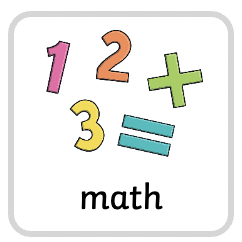
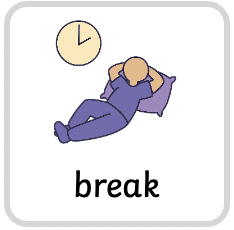

First-Then or First-Then-Next Boards First-then boards, or the Premack principle, i.e, a less preferred activity is followed by a highly preferred activity, are a best-practice strategy especially for least preferred activity. It uses visual cues to help students understand task sequencing and stay focused on one activity at a time. Use these to:
Show immediate activity sequences.
Provide motivation through preferred activities
Reduce anxiety about upcoming tasks.
Support behavioural expectations by giving students closure when tasks end.
Visual Cues and SupportsThese help students focus, stay on task, and feel secure by making expectations predictable. Other uses of visual support include but not limited to:

Color-coding systems for subjects or activities.
Instruction cards for multi-step tasks.
Emotion identification charts.
Voice-level indicators.
Transition warnings and timers.
Pictures of finished products (teacher examples).
Implementation Tips
Every visual support should serve a purpose—otherwise it becomes clutter. Students must be taught how to use visuals effectively. Don’t expect immediate results. Instead:
Explicitly teach each visual tool. Oh and don’t forget a visual for “change.” This single visual can be repurposed in countless ways—fire drill, assembly, visitor, or any unexpected shift in routine.

One of the classrooms I taught in had a “special activity” visual. You can certainly use that, but I personally prefer “change.” Why sugarcoat reality? Change happens—and it’s better to help students face it head-on. (But hey, that’s just me.)
Practice referencing visuals throughout the day, so it also becomes second nature to you.
Another helpful visual is sign language. I’m not fluent in ASL, but I’ve learned enough to pair ASL when I’m communicating with my students. They not only hear but can also see what I am directing to or expecting from them. I regularly use signs for wait, sit, help, sorry, thank you, toilet, stop, change, same, different and all done. Especially during moments of escalation, nonverbal communication often works better than verbal instructions.
Customise visuals to match preferences, needs or the activity.

Conclusion
Successful inclusion isn’t about making students fit into rigid structures—it’s about creating flexible, supportive environments where all students can thrive. When applied consistently and compassionately, these strategies help autistic students access education, build confidence, and reach their full potential.

Reference
Above and Beyond Therapy. (2025, February 11). 9 accommodations for students with autism. Above and Beyond Therapy Blog. https://www.abtaba.com/blog/accommodations-with-autism
Autism Adventures. (2024, June 20). The best visual supports for a special education classroom. Autism Adventures Blog. https://www.autismadventures.com/the-best-visual-supports-for-a-special-education-classroom/
Autism Awareness Centre. (2023, November 24). What accommodations are helpful for an autistic student? Autism Awareness Centre. https://autismawarenesscentre.com/what-accommodations-are-helpful-for-an-autistic-student/
Chalkboard Superhero. (2022, February 25). 10 ways to use visual supports in your special education classroom. Chalkboard Superhero Blog. https://chalkboardsuperhero.com/2019/06/10-ways-to-use-visual-supports-in-your-special-education-classroom/
Cross River Therapy. (n.d.). 15 accommodations for students with autism. Cross River Therapy. https://www.crossrivertherapy.com/autism/accommodations-for-students
Dettmer, S., Simpson, R. L., Myles, B. S., & Ganz, J. B. (2000). The use of visual supports to facilitate transitions of students with autism. Focus on Autism and Other Developmental Disabilities, 15(3), 163-169.
IBCCES. (2021, May 26). 15 behavior strategies for children on the autism spectrum. International Board of Credentialing & Continuing Education Standards. https://ibcces.org/blog/2016/07/15/behavior-strategies/
Incredible Years. (2025, February 18). Effective classroom strategies for teaching students with autism. Incredible Years Blog. https://www.incredibleyears.com/blog/autism-in-the-inclusive-classroom
Mesibov, G. B., Shea, V., & Schopler, E. (2005). The TEACCH approach to autism spectrum disorders. Springer.
Osborne, L. A., & Reed, P. (2011). School factors associated with mainstream progress in secondary school pupils with autism spectrum disorders. Research in Autism Spectrum Disorders, 5(3), 1253-1263.
Adapting for Autism. (2023, April 13). 5 tips for using visual supports in the classroom. Adapting for Autism Blog. https://www.adaptingforautism.com/visual-supports/using-visual-supports/


Comments